

Why Agentic AI Needs More Than Skilled AI Engineers
Introduction
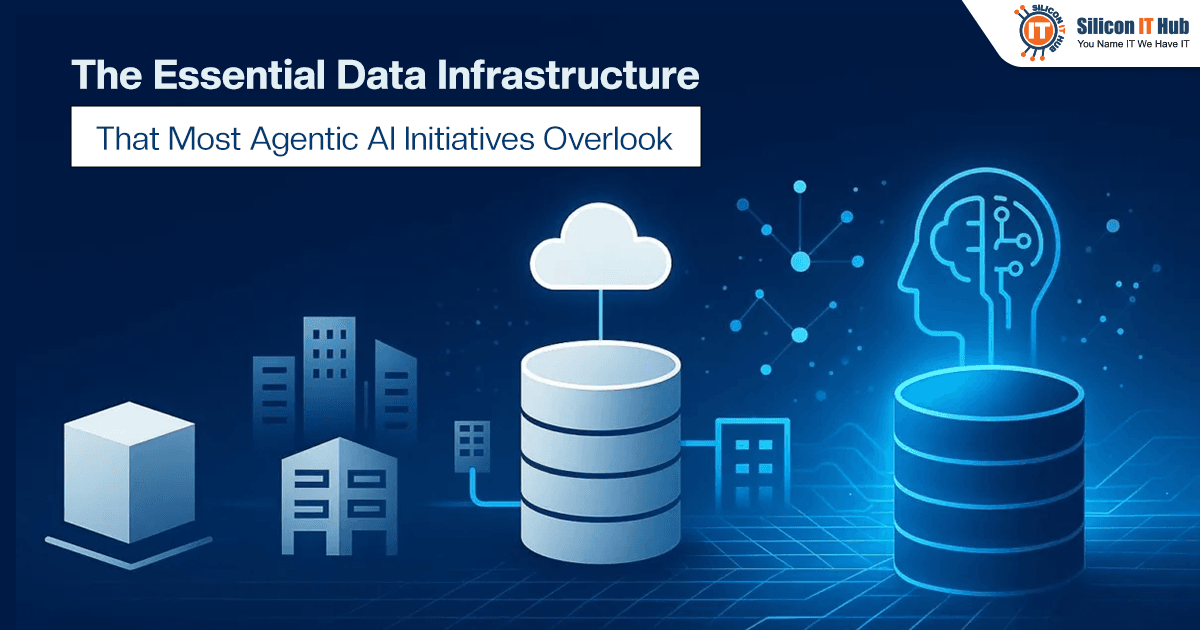
Organizations are preparing their data for AI, but many Agentic AI initiatives overlook two essential infrastructure components: context engineering and tool-level permission checks. Your agents need more than access to your enterprise data. They need the right business context to interpret that data, along with clear permissions that define which actions they can take through your connected applications. Without these controls, your agent may retrieve accurate information but still make an incorrect decision or attempt an unauthorized action.
The skills required to build these capabilities are also in short supply. The 2025 State of Application Strategy Report found that 54% of organizations lack sufficient AI skills in-house. If you plan to deploy AI agents across your business, you need engineering expertise in enterprise integration, data architecture, context management, and secure tool execution. Your development team or AI software development company must know how to connect agents with your business applications, retrieve relevant information, respond to changing conditions, and restrict actions based on defined permissions. With these capabilities in place, you can move beyond AI pilots and deploy agents reliably in your production environment.
According to F5's 2025 State of Application Strategy Report, 72% of organizations cited data issues as a barrier to AI adoption in 2024. In 2025, data quality remained a concern for 48% of respondents, while a lack of human skill sets became the most-cited AI adoption barrier. The challenge is shifting from preparing enterprise data to building the engineering capabilities needed to turn that data into controlled, autonomous actions.
The report also found that 65% of respondents currently use operational telemetry to drive automation, while another 23% plan to do so within 12 months. The survey asked: "In what ways do you use, or plan to use, your operational data?" This points to an important implementation requirement: your team needs to connect operational data with agents that can interpret changing conditions, execute permitted actions, and escalate decisions when human intervention is necessary.
Key Takeaways
- Build a shared integration layer: Connect enterprise applications through governed interfaces instead of creating separate integrations for every agent. MCP can help standardize tool connectivity.
- Support timely data access: Use batch and real-time pipelines based on how quickly each workflow needs updated information.
- Improve knowledge retrieval: Combine vector databases, RAG, metadata filtering, and reranking to give agents relevant business information.
- Control what agents can do: Enforce tool-level permissions, individual agent identities, short-lived credentials, and approval checks for high-impact actions.
- Make agent decisions traceable: Use context engineering, data quality checks, and observability to understand how agents reach decisions and identify errors.
Why Agentic AI Needs More Than AI-Ready Data
Agentic AI infrastructure works across connected tasks. An agent may retrieve information from an ERP system, check a policy, call an external API, and initiate an action based on the information it receives. Each stage needs dependable facts and the ability to interpret them properly.
Consider a 400-person auto-parts manufacturer that runs two ERP systems after an acquisition. Its requisition agent reads inventory from one system and approved suppliers from the other. This AI agent requires the latest information on inventory, a list of approved suppliers, contract details, and the budget of each department. If all these pieces of information are contained in disparate systems, the AI agent might obtain contradictory information or base its suggestion on an old purchase price.
Your engineering team needs to know how the two ERP systems share inventory and supplier data, and who is allowed to read each.
AI data management connects enterprise data while preserving its business context, ownership, and access controls. Getting to AI-ready data takes more than cleaning up databases. Your team has to prepare structured records, unstructured documents, metadata, and operational events so AI agents can retrieve them when they need them.
Six Data Infrastructure Layers That Agentic AI Needs
A dependable enterprise AI infrastructure requires connected data capabilities to support information recovery, decision-making, and controlled execution.
Unified Data Integration and Well-Defined Data Pipelines
Connect the sources your agents read through one governed integration layer instead of building separate connections for each agent. This approach starts paying off when you deploy more than two or three agents, especially when they need access to the same ERP, CRM, procurement, or monitoring systems. You can maintain data access rules, authentication, and integration logic in one place rather than duplicating them across agents. This reduces maintenance effort and makes it easier to introduce new agents without rebuilding existing integrations.
AI data integration connects these applications and exposes their information through controlled interfaces.
Model Context Protocol (MCP) provides a standard way for AI agents to connect with external tools, data sources, and enterprise applications. It allows your team to expose business systems through consistent interfaces instead of building custom integrations for every agent. MCP can simplify tool connectivity, while the connected systems and integration layer must enforce authentication and permission checks.
Well-designed Data pipelines for AI take care of ingestion, cleaning, transformation, and delivery, so the data reaches agents in a usable state. They should support batch processing as well as event-based updates.
For example, a support agent at a telecom provider may pull a customer’s plan from the CRM, their last payment from the billing system, and their router delivery status from order management. A shared integration layer gives the agent access to these records without requiring direct connections to every underlying database.
Tools like Kong (API gateways), MuleSoft (integration platforms), and Kafka (event brokers) help manage these connections. Data contracts sit alongside them, spelling out what format each system should expect, what every field means, and how often the data needs an update.
Real-Time Data Processing and Synchronization
An agent making decisions about your current conditions needs information that reflects recent system updates.
Real-time data processing helps agents respond to changes in inventory, transactions, customer activity, and operational events. Batch pipelines still earn their place for historical analysis and scheduled reporting, while event-driven processing covers anything time-sensitive.
Picture a mid-size online retailer on Black Friday, taking hundreds of orders an hour. An inventory agent checks whether a product is in stock before it validates a new order. If it is working from a stock snapshot generated six hours earlier, it could easily confirm an item that has already sold out.
A streaming pipeline can capture inventory changes and publish updates to connected systems as transactions occur. Apache Kafka, Amazon Kinesis, and cloud-native event services all support these workflows. Change Data Capture (CDC) adds to that by picking up changes in a database and passing them along to the applications that depend on them.
Your engineering team should also decide how fresh the data needs to be for each task, since not every agent needs updates the second they happen. A daily sales report does not require millisecond updates, while an agent reserving live inventory may need information refreshed within seconds.
Vector Databases and Retrieval-Augmented Generation
Enterprise knowledge exists in formats that traditional relational databases do not handle well. Contracts, policy documents, technical manuals, and product specifications contain information that agents need to interpret.
Vector databases for AI store embeddings, which are numerical representations of text and other content. Options include pgvector if your team already runs PostgreSQL, and managed services such as Pinecone or Weaviate. These representations allow programs to search for information not by keyword but by its semantic similarity to other information.
An employee asks, “Can I claim hotel expenses during a client visit?” The answer may sit in the “Business Travel Reimbursement” section of the company policy, even though the question never uses those words.
A keyword search might miss the relevant section. Semantic retrieval can identify the relationship between the question and the policy document.
Retrieval-augmented generation (RAG)
Combines this retrieval process with a language model. The application retrieves relevant documents and supplies their content as context before the model generates a response.
A RAG pipeline should include document parsing, chunking, metadata tagging, embedding generation, indexing, and retrieval evaluation.
After retrieving relevant documents, use a reranking step to move the most useful results higher in the list before passing them to the language model. Your retrieval system must also keep document-level permissions synchronized with the source system. This ensures agents retrieve only information their users are authorized to access, even when document access rights change.
Vector search also has shortcomings. Similarity scores do not determine whether the document is the latest, authoritative, or legally applicable. Information retrieval systems have to apply version checks, access control, and metadata filtering to documents before delivering them to the agents.
Data Governance, Security, and Access Control
An agent may need access to several enterprise applications, but that doesn't mean it should have unrestricted access to their records.
Data governance for AI sets out which information an agent can retrieve, how it can use that information, and which actions need a human to sign off.
A governance framework defines who can access business data and what they can do with it. It also assigns data ownership, protects information through encryption and secure credential storage, sets retention rules, and records every access and action for audits.
Give each AI agent its own identity with scoped, short-lived credentials. Limit access to only the tools and data required for its assigned tasks. Avoid shared service accounts with broad permissions, as they make it harder to trace actions and can enable unauthorized access.
A procurement agent might read supplier quotations and compare contract rates, but salary records and unrelated financial accounts should stay off-limits.
Your team also needs to enforce permissions at the source system and at the tool-execution layer, not only inside the AI application’s interface.
The NIST AI Risk Management Framework (AI RMF 1.0) provides guidance for identifying, assessing, and managing risks throughout the AI system lifecycle. For generative AI applications, its companion document, NIST AI 600-1: Artificial Intelligence Risk Management Framework: Generative Artificial Intelligence Profile, offers additional guidance on risks such as data privacy, information security, and human-AI interaction. You can use both resources to shape governance policies, security controls, monitoring practices, and human oversight for your AI agents.
Data Quality and Observability
An agent can follow the right instructions and still produce a wrong result if the data it receives contains errors. Data quality and observability help your team catch missing fields, duplicate records, inconsistent formats, outdated information, and unexpected changes in data pipelines.
Picture a supplier database where one vendor appears twice after a merger, and the two records list different payment terms: 30 days on one, 60 on the other. An agent preparing a purchase recommendation could pick either value, depending on which record it happens to retrieve.
Automated validation should check supplier identifiers, contract versions, mandatory fields, and record freshness before any information reaches the agent.
Monitoring should also cover pipeline failures, retrieval accuracy, source freshness, and agent behavior. Your team needs to trace a questionable decision back to the source records and processing steps that produced it.
Track every agent step, including data retrieval, model decisions, tool calls, and actions taken. OpenTelemetry can help capture and correlate these traces across connected services. If an agent makes an incorrect decision, your team can trace it back to the source records, retrieved context, and processing steps that influenced the outcome. This makes debugging easier and helps identify where data or execution errors occurred.
Context Engineering Connects Enterprise Data With Agent Decisions
Even when an agent can access the right database, it still needs to understand what the retrieved information means.
Context engineering for AI agents involves preparing and managing the information an agent needs for a particular task. This covers your business rules, relevant documents, user permissions, conversation history, system state, and whatever connected tools return.
A sales agent is reviewing a 20% discount request from a mid-market customer. The customer’s purchase history won’t be enough. The agent also needs the applicable discount policy, the current account status, the approved pricing limits, and the conditions of any active contract.
A well-designed context layer hands the agent these details in a structured format. It also strips out irrelevant information, which could distract the model or push up processing costs.
An effective approach includes:
- Business metadata. Define terms such as active customer, approved supplier, available inventory, and overdue invoice.
- Task-specific retrieval. Fetch only the records relevant to the current workflow.
- Context freshness. Refresh information when an underlying record changes.
- Session and task state. Preserve relevant information across connected steps.
- Source attribution. Retain references to the records and documents used in a decision.
Without this layer, two agents can read the same ‘approved supplier’ field and act on different meanings.
Tool-Level Permission Checks Keep Agent Actions Within Defined Limits
Access to business data does not automatically give an agent permission to act on it. Your system must check what each agent can do whenever it calls an external tool or application.
Design agent actions to handle retries without creating duplicate transactions. For example, use idempotency checks to prevent duplicate purchase orders if an API request runs more than once. Require human approval or a dry run before high-impact changes, provide rollback options for recoverable actions, and enforce rate and spending limits to prevent excessive or unintended operations.
Retrieved documents, web pages, and tool outputs can contain malicious instructions designed to manipulate an agent. Treat this content as data to be evaluated, not as instructions that override the agent's system rules or permissions. Your implementation should validate tool inputs, restrict agent actions, and prevent untrusted content from changing access policies. The OWASP Top 10 for LLM Applications identifies prompt injection as a key security risk and provides guidance for addressing it.
For example, a procurement agent may read supplier quotations, compare prices, and prepare a purchase order. However, it should not approve the order or release payment unless its assigned role allows those actions. Your tool layer should verify the agent's identity, check its permissions, and require human approval for actions above its authority.
Apply these checks at the point of execution, not just in the agent's prompt or application interface. This prevents an agent from bypassing business rules through a connected API, even when its instructions or retrieved context suggest otherwise.
Traditional AI Data Architecture vs. Agent-Ready Infrastructure
Traditional AI applications and agentic systems have different information requirements. Agents that act across systems need shared APIs, live pipelines, and audit trails that single-purpose AI apps do not.
| Infrastructure area | Conventional AI application | Agent-ready enterprise infrastructure |
| Data access | Application-specific connections | Shared APIs and governed data access |
| Data processing | Primarily scheduled batch jobs | Batch and event-driven pipelines |
| Data freshness | Periodic updates may be sufficient | Task-specific freshness and live updates |
| Knowledge retrieval | Structured queries and basic document retrieval | Semantic retrieval, vector search, and RAG |
| Data governance | Application-level access controls | Identity-based permissions and audit trails |
| Data quality | Scheduled validation | Continuous checks and source monitoring |
| Context management | Prompt-level context | Task state, business metadata, and context engineering |
| Monitoring | Model and application performance | Data lineage, retrieval quality, agent actions, and pipeline health |
The table describes architectural differences rather than a universal technology migration path. Existing enterprise systems can support agentic workloads when your team adds the required integration, governance, and monitoring capabilities.
Why Do You Struggle to Implement Agentic AI at Scale?
Agentic AI projects often struggle when teams cannot connect enterprise applications, prepare reliable data, and control how agents use external tools. These tasks require coordination across AI engineering, data engineering, cloud infrastructure, and security.
For example, an IT operations agent needs access to monitoring systems, clear limits on the actions it can perform, and rules for escalating incidents to engineers. Without these capabilities, even a technically capable agent may fail to complete routine tasks reliably.
If your internal team lacks experience with tool-calling agents, governed integrations, or access-controlled retrieval, an AI agent development company can help address those gaps.
How Can You Prepare Your Data Architecture for Agentic AI?
Prepare your data architecture for agentic AI by proving it on a single workflow before you build anything broader. You map the data that workflow needs, connect only those systems, and test the agent on realistic records before it acts on its own. Building a full data platform first often delays the pilot and ties up budget before you know the workflow works, so tackle the highest-risk dependencies first and expand from there.
First, pick a process where you can measure the outcome, like supplier onboarding, customer support escalation, or invoice verification. Next, map the information that the workflow needs. List the source systems, who owns the data, how often it updates, who has access, and what quality problems you already know about.
Then prepare the data paths. Connect the relevant applications through APIs or integration pipelines, standardize the key fields, and set up validation rules. If the workflow needs semantic access to documents or unstructured content, add vector retrieval.
Before you let the agent act on its own, test it against realistic records. Throw in duplicate entries, missing fields, outdated policies, conflicting values, and APIs that aren’t available. Then watch what it does. Does it flag its uncertainty, ask for clarification, or escalate the task when it should?
A useful pilot should measure:
- Data retrieval accuracy.
- Source freshness and pipeline latency.
- Incorrect decisions caused by inconsistent records.
- Unauthorized access attempts.
- Successful task completion and human escalation rates.
There are trade-offs. Real-time pipelines increase infrastructure and monitoring costs, while vector databases introduce additional indexing and maintenance work. Depending on workload size and usage, managed vector database clusters can cost from a few dollars to several thousand dollars per month. These estimates generally cover cluster compute and storage, excluding additional expenses for embeddings, data ingestion, query usage, backups, and engineering support.
The architecture should match the workflow's actual requirements. Start with the systems and data needed for the first use case, then expand as additional agents enter production.
Experienced AI Agent Development Company, to Build Enterprise-ready Agentic AI solutions
LET’S CONNECTRun a data and skills readiness assessment before you scale the pilot
List the source systems, data owners, integration needs, quality gaps, and access limits for the one workflow you plan to automate. Also note the engineering skills it will take to keep the system running.
Then use that list to sort out which skills your internal team already has and where you need external help. An AI agent development company can fill those gaps, whether that means building integrations, setting up validation, or testing how the agent behaves. Pick one workflow this week. List its source systems, data owners, and refresh rates. If you can not fill in the owners, you have found your first problem.


 Have an Idea?Let’s Build It Together!