

Software Compliance in Fintech: Role of HIPAA, PCI, and SOC 2 Revealed
Introduction
Compliance is a mandatory requirement for all fintech companies around the world. Whether you need to develop a digital wallet, lending platform, wealth management solution, or healthcare payment app, compliance will matter. Compliance affects trust from customers and investors and business sustainability in the fintech industry. Renowned providers of fintech software development services create highly compliant app solutions for these purposes.
Fintech organizations also face the challenge of identifying a suitable compliance framework that is easier to implement. It is a serious problem, as even the slightest non-conformity with the laws leads to fines, breaches of data security, and missed opportunities. Some fintech companies consider that every fintech solution should be HIPAA-compliant, while others believe that SOC 2 compliance is necessary for payment security.
Custom software development services may help you with fintech apps that comply with the requirements. These services reduce implementation risks, simplify audits, and support long-term scalability of your application. This guide explains how software compliance fintech teams can meet HIPAA, PCI DSS 4.0.1, and SOC 2 requirements in the year 2026 and beyond. It also demonstrates the differences between HIPAA vs PCI DSS vs SOC 2 with their actual roles.
Importance of Compliance in Fintech Sector
Today’s fintech ecosystem brings a different set of challenges than it did a few years ago. As the global fintech industry market is expanding rapidly, technological advancements can help companies develop advanced apps. As per the estimate from the research firm, market.us, the fintech market is expected to reach USD 1382 billion by 2034. The following graph shows the gradual increase in the market share of the fintech industry in the 2025-2034 period.
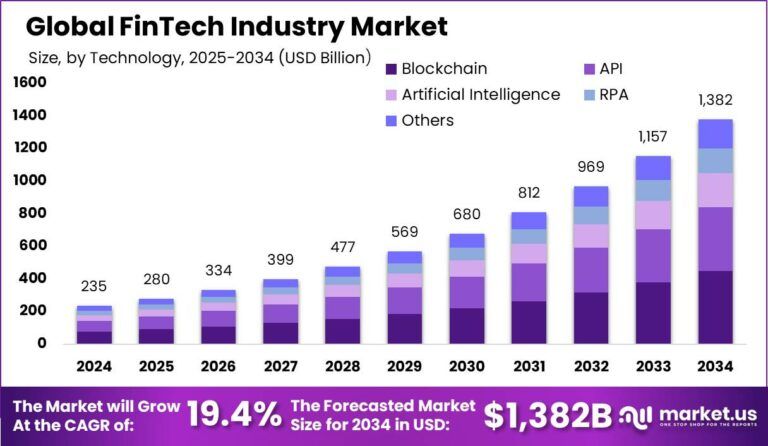
Source
Modern fintech applications have advanced features including embedded finance platforms, open banking APIs, AI-powered fraud detection, and digital identity verification. Some apps have third-party payment gateways and cross-border payment functionality. All such integrations increase the volume of sensitive information. Financial records, authentication credentials, payment card data, etc., are some examples of sensitive data.
In some cases, protected health information (PHI) and personally identifiable information (PII) also exist in fintech apps. These features enhance the importance of compliance standards significantly. For example, a SaaS fintech platform should follow SOC 2 compliance before onboarding users. A digital wallet or payment application useful for processing credit card transactions must comply with PCI DSS.
Understanding Three Compliance Frameworks
HIPAA, PCI DSS 4.0.1, and SOC 2 frameworks address different security and governance challenges. It is fair to say that none of these frameworks can satisfy the compliance requirements of another one. Each of these frameworks addresses different risks, security controls, and operational processes. Here is a quick table showing the scope of these major compliance frameworks.
| Framework | Scope |
| HIPAA | Healthcare payment and insurance platforms |
| PCI DSS 4.0.1 | Payment processors, gateways, and digital wallets |
| SOC 2 | SaaS providers and fintech platforms |
This table clearly indicates that these frameworks have completely different scopes and benefits. This is a reason why every fintech company does not need all three frameworks.
Scope of Each Regulatory Framework
Every compliance framework depends on your sector, business model, the data you collect, and the services you offer. Here we mention three different examples where we need specific regulatory frameworks.
Digital Wallet
A digital wallet application that stores and processes payment card information requires PCI DSS compliance. This application mostly does not need HIPAA unless it deals with healthcare information.
Healthcare Payment
A platform that manages online patient billing and accepts card payments needs to follow all three standards: HIPAA, PCI DSS, and SOC 2. The SOC 2 framework is useful when the platform meets enterprise customer requirements.
Lending Platform
An online lending solution usually handles financial records, but not payment card data. It focuses on SOC 2 and other financial regulations rather than HIPAA. It may be required to follow PCI DSS framework requirements.
Fintech companies can prevent unnecessary spending behind these compliance frameworks by getting a proper understanding without compromising on addressing risks.
HIPAA and Fintech Companies- Making Healthcare Payments Safer
Healthcare-related payments, medical financing, insurance claims processing, pharmacy payment solutions, and telemedicine billing platforms-related applications need this framework. These applications combine financial transactions with protected health information (PHI), and therefore, HIPAA compliance requirements are applicable. Simply put, whenever fintech software creates, stores, processes, or shares PHI, HIPAA requirements may apply.
Core HIPAA Requirements for Fintech Organizations
Regulatory expectations have increased, and cybersecurity practices have evolved recently. Healthcare organizations need to bring robust technical safeguards, continuous risk management, and documented security controls for addressing HIPAA compliance requirements. Some of these requirements include
Administrative Safeguards
Organizations must establish administrative policies for risk assessments, workforce security, security awareness training, supplier management, and business associate agreements (BAAs). Incident response planning is also necessary to implement.
Physical Safeguards
Even cloud-first fintech companies remain responsible for controlling physical access to systems containing PHI. It is, therefore, essential to ensure secure office access and device management.
Technical Safeguards
Technical controls remain one of the most critical aspects of HIPAA compliance. Organizations should implement measures such as MFA (Multi-factor authentication), role-based access control, audit logging, automatic session timeouts, and secure backup procedures.
Modern fintech software development services can integrate these controls during the process rather than adding them after deployment. This security-by-design approach helps healthcare organizations reduce remediation costs. It is fair to say that fintech companies must avoid some common mistakes related to HIPAA compliance. Examples include
- Collecting more data than necessary
- Failing to encrypt patient information
- Overlooking third-party integration
- Missing audit logs
For successful software compliance, fintech strategies need to include all the necessary aspects.
PCI DSS 4.0.1- How It Protects Payment Card Data in Fintech Apps
This security standard is very important, particularly if your fintech application processes, stores, or shares the details of payment cards. HIPAA is an American federal law that regulates PHI, while the PCI DSS is a global security standard developed by the PCI SSC (Payment Card Industry Security Standards Council). Its ultimate goal is to minimize payment card fraud by securing the cardholders' data during its entire lifecycle.
Compliance with PCI DSS is mandatory for all fintech companies that process payment card information regardless of their size. Payment gateways, digital wallets, merchant platforms, eCommerce marketplaces, BNPL platforms, and subscription billing platforms have to comply with this security standard. Organizations that outsource payment processing may still meet PCI DSS responsibilities based on the flow of payment information.
Top Requirements for PCI DSS 4.0.1
PCI DSS requirements aim at protecting payment card data from unauthorized access, theft, and misuse. Some of the most important requirements for this regulation are-
Secure Network Infrastructure
Organizations should build secure network environments that restrict unnecessary access to payment systems. Such environments should have controls including firewalls, secure configurations, network segmentation, vulnerability assessments, etc. Well-designed, robust architecture can reduce the scope of PCI assessments. It also reduces the impact of potential security incidents.
Strong Access Authentication
Identity security is one of the core priorities in PCI DSS 4.0.1. Companies should implement MFA (Multi-factor authentication, least-privilege access, unique user accounts, role-based permissions, and periodic access reviews. These controls, including password management policies, can reduce the likelihood of unauthorized access to cardholder data.
Protect Stored Data
PCI DSS permit explicitely for retaining sensitive authentication data after authorization. Enterprises can protect the cardholder’s stored data by using strong encryption, secure key management, proper tokenization, and secure transmission protocols. Many modern fintech applications reduce compliance scope by replacing stored card numbers with payment tokens.
Continuous Security Monitoring
Compliance is not a point-in-time activity anymore. Organizations should monitor system logs, security events, failed authentication attempts, and configuration changes continuously to achieve compliance. Security teams should also maintain documented incident response procedures to address potential payment data breaches as they occur.
Regular Safety Testing
PCI DSS expects companies to validate that security controls operate continuously and effectively. Whether it is vulnerability or penetration testing, configuration validation, or secure code reviews, regularity is the key for ensuring compliance and security. Secure code reviews and application testing are among the key practices.
Organizations investing in custom software development services integrate security testing in the lifecycle. This helps them identify vulnerabilities before deployment.
SOC 2- How It Enhances Organizational Trust
HIPAA and PCI DSS are different than SOC 2 because the latter’s scope is not limited to one industry or specific type of data. Instead, SOC 2 evaluates whether an organization has implemented effective internal controls to protect customer information. Enterprise customers request SOC 2 reports before signing contracts with fintech software providers. As a result, SOC has become a competitive differentiator along with a security benchmark.
SOC 2 does not prescribe a fixed technical checklist like PCI DSS, but auditors assess security controls for design, documentation, implementation, and operation. Identity management, supplier risk management, backup & recovery, and security monitoring are some examples of evaluated controls. It makes SOC 2 valuable, especially for SaaS-based fintech platforms serving enterprise customers.
Requirements for SOC 2 Type I and Type II
It is fair to say that many organizations are still unsure about the SOC 2 report they need. Here is the difference between the two types of SOC 2.
| Type I | Type II |
| Evaluates whether controls are properly designed at a specific point in time. | Evaluates whether controls operate effectively over an extended observation period. |
Enterprise customers typically place greater value on SOC 2 Type II because it shows consistent operational effectiveness instead of a one-time assessment.
HIPAA vs PCI DSS vs SOC 2- Differences You Should Know
Organizations can avoid investing in unnecessary compliance activities while ensuring that risks are addressed effectively by understanding the differences between HIPAA vs PCI DSS vs SOC 2.
| Framework | Primary Objective | Specific Data Protection |
| HIPAA | Protect healthcare information | PHI (Protected Health Information) |
| PCI DSS 4.0.1 | Protect payment card data | Cardholder data |
| SOC 2 | Demonstrate organizational security controls | Customer and business information |
These frameworks differ from one another; they share several common security principles.
Looking to build a robust, secure, and user-friendly fintech app solution?
LET’S CONNECT!Compliance Best Practices for Fintech Companies
The most successful fintech companies meet compliance requirements at every level of business operations and risk management. It reduces costly rework, strengthens trust, and avoids penalties. It is essential to identify all the applicable regulations in the beginning. Another step is to integrate security features into the development cycle.
Other important steps include strengthening IAM (Identity and Access Management) and utilizing secure third-party integrations. Finally, fintech organizations need to monitor compliance continuously through security event monitoring, access audits, and policy updates. When you consider compliance as an ongoing process, your organization can remain better prepared for external audits and security incidents.
Enterprise customers assess security posture before signing contracts frequently. Investors evaluate governance practices during due diligence. In such a scenario, compliance has become a business differentiator. Meeting fintech compliance standards can give your organization a competitive advantage with benefits like reduced cybersecurity risks and improved operational resilience.
Role of Custom Software Development Service Providers
Custom software development service providers can develop compliant application architectures. These service providers can help with the creation of a secure API, audit logging, and even with encryption of the application. They offer payment gateway integration and implementation of cloud security best practices.
Fintech software development services are helpful when combining payment processing and digital banking into one secure and compliant application. It is, however, better to remember that regulatory compliance will also depend on organizational policies and employee training. Ongoing governance and operational processes contribute to meeting regulatory requirements as well.
Concluding Remarks
Understanding HIPAA vs PCI DSS vs SOC 2 is essential for fintech organizations to build secure digital products. Each of these frameworks addresses specific security concerns. HIPAA is for protecting PHI (Protected Health Information), PCI DSS 4.0.1 is for protecting payment card data, and SOC 2 shows the effectiveness of an organization’s security and operational controls. Fintech software development services can help you meet these requirements.


 Have an Idea?Let’s Build It Together!