

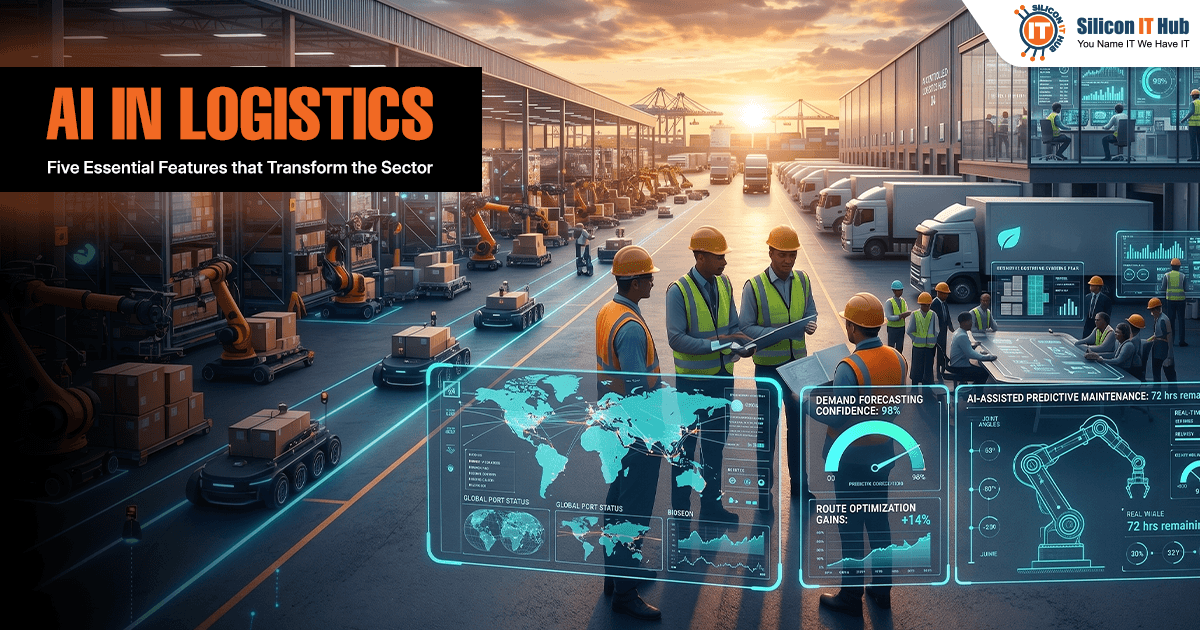
AI in Logistics- Five Essential Features that Transform the Sector
Introduction
Successful logistics platforms have AI-driven features to facilitate decision-making and increase efficiency. A decade ago, logistics technology focused on digitalization. Transportation, courier, and shipping companies opted for transportation management systems and integrated dashboards. This digital logistics, however, is not sufficient these days due to increasing competition and complexities. This is a key reason companies prefer AI in logistics.
Highly successful logistics platforms use AI technology to perform several tasks. These include predicting disruptions and automating customer interactions while making quicker decision-making. Logistics companies can reduce delays, improve customer experiences, and save big on operational costs by incorporating these technologies. The right AI development services provider can integrate sophisticated features to increase the efficiency of logistics operations.
If you want to build, upgrade, or assess your logistics management software, here are five AI features worth considering. These features can make a high-performing logistics operation an intelligent and proactive one.
Market Size of Global AI in Logistics Sector
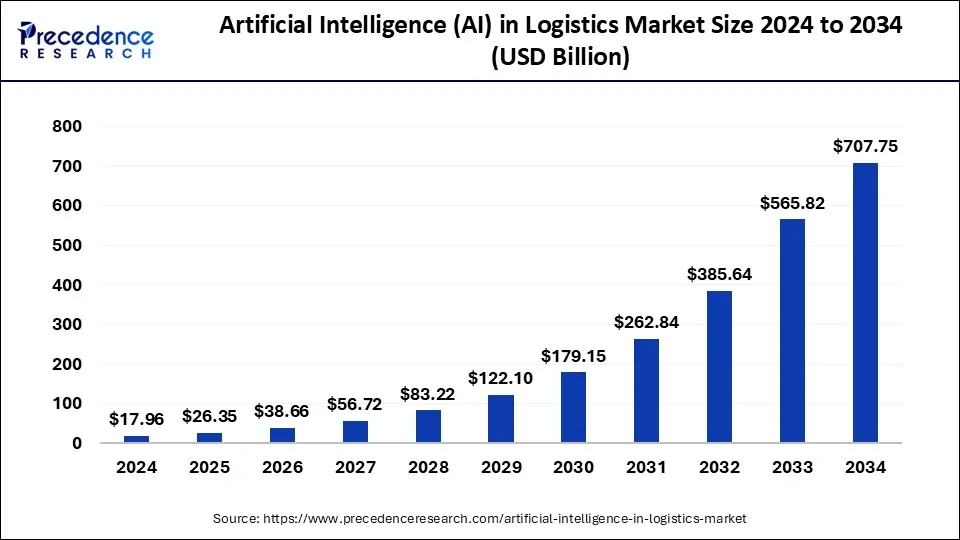
Advanced software has AI-powered features for simplifying complexities and streamlining logistics operations. Looking at the benefits, the market size of AI in logistics increases steadily. As per the Precedence Research report, the global AI in logistics market size was around USD 17.96 billion in 2024. It is estimated that the size will reach USD 707 billion by 2034. The following graph shows the global market size of artificial intelligence in logistics.
Source
This technology is useful for eliminating the limitations of traditional logistics platforms. Challenges like supply chain vulnerabilities, changing customer expectations, and delivery deadlines need to be addressed using AI technology.
Five Logistics Management Software Features to Consider
A modern logistics management solution should have five features that can help the company make decisions.
Predictive Analytics
This capability anticipates problems in advance and assists logistics companies in delivering the fastest operational impact. Predictive analytics in logistics can produce measurable business outcomes by addressing the sector’s most powerful challenge: uncertainty. Unlike traditional logistics systems that act reactively when a problem has already occurred, predictive systems identify risks early.
AI systems with predictive analytics can analyze
- Historical shipment data
- Traffic patterns
- Weather conditions
- Vehicle performance trends
- Supplier reliability metrics
- Seasonal demand fluctuations
This gives early identification of risks before they become disruptions in operations. We can take an example of a regional distribution network. When this network manages deliveries across multiple cities, it requires identifying a likely delay. Analysis of weather forecasts and historical route performance makes it possible. Predictive analytics can help this network reduce customer complaints, improve delivery reliability, and avoid costly last-minute adjustments.
Predictive analytics in logistics is one of the fundamental AI features in advanced logistics software for this reason.
Intelligent Route Optimization
The intelligent route optimization feature learns continuously to evolve and modify planning. Many route optimization tools use static rules and follow predefined protocols. These tools are effective in stable conditions, but fail to read the situation when variables change rapidly throughout the day. An AI-driven route optimization tool is useful in such situations.
Instead of calculating the shortest route, the intelligent route optimization systems evaluate
- Live traffic conditions
- Driver availability
- Vehicle capacity
- Road closures
- Fuel consumption patterns
- Delivery priorities
These systems then adjust their recommendations dynamically. When a logistics company manages hundreds of deliveries per day, it experiences significant improvements in efficiency by reducing unnecessary mileage and idle time. An intelligent route planner considers current conditions instead of relying on assumptions to give accurate estimates to customers.
AI-assisted routing enables dispatch teams to respond to congestion and operational changes in real time. This results in improved delivery performance with accurate decisions. Intelligent route planning saves time, fuel, and customer relationships.
AI-Based Customer Communication
Some major customer expectations in this digital era include immediate updates about shipment status, delivery schedules, delays, and exceptions. No customer can accept waiting long for a support response. This makes customer communication one of the most important factors. Modern logistics platforms incorporate AI-powered customer communication and support capabilities. This functionality can
- Answer shipment inquiries instantly
- Give real-time delivery updates
- Resolve common service questions
- Escalate complex issues to humans
- Notify customers about disruptions
Customer support teams spend a lot of time handling repetitive requests such as order status checks and scheduling inquiries. AI-driven systems automate interactions and maintain consistency. In turn, it can enhance client experience and help your team. Proactive communication with customers can avoid friction and frustrations. This AI feature in a logistics platform helps in increasing customer satisfaction and retention successfully.
Demand Forecasting
Forecasting plays an important role in enhancing logistics operations. Demand forecasting functionality can be useful in predicting stock, transport, fleet, and procurement. Traditional forecasting algorithms depend heavily on historical data. The main issue with this kind of average is that they do not show a complete picture of unexpected changes in the market.
Using AI-powered forecasting and capacity planning can analyze several variables. Some of them can be historical sales trends, economic conditions, regional variations in demand, weather conditions, and even market events. It all works towards one goal – minimizing forecasting mistakes for better planning.
A logistics company dealing with eCommerce can face huge spikes in festive periods and promotions. AI forecasting solutions can help planners recognize future demand variations ahead of time. It enables companies to adjust inventory levels and transportation capacity before the increase in order volume.
This feature enables companies to reduce unwanted situations like stockouts and overstocking. It is also beneficial for improving fulfillment performance.
Exception Management
Exceptions are one of the most important cost-driving factors for the logistics industry. Unexpected disruptions, including delivery failures, inventory shortages, customs delays, route disruptions, vehicle breakdowns, and documentation errors, are some exceptions. Companies can get alerts about these exceptions through traditional systems. AI-driven exception management, however, works differently.
An intelligent exception management system can detect anomalies automatically, prioritize incidents based on business impact, recommend corrective actions, and notify relevant stakeholders. It has a significant operational impact compared to traditional systems. AI-powered management systems monitor operational activity and highlight the field that requires immediate attention.
This feature gains prominence as logistics networks become more complex.
It is better to consult a reliable AI development services provider to learn more about the scope and benefits of these intelligent features. It is fair to say that AI-powered platforms are superior to traditional logistics platforms.
Impact of AI Features on Logistics Teams
Many organizations consider AI adoption as a software initiative. Looking at its features, however, it is fair to mention that AI impacts decision-making and other relevant industries. The following table shows the AI-led operational shift.
| Traditional Logistics Platform | AI-Powered Logistics Platform |
| Reports operational events | Predicts operational risks |
| Reactive issue resolution | Proactive intervention |
| Static route planning | Dynamic route optimization |
| Manual exception monitoring | Automated anomaly detection |
| Historical reporting | Predictive forecasting |
| Manual customer updates | Intelligent customer communication |
The role of AI here in the logistics sector is to enhance the decision-making process and generate better customer experiences.
Looking to Develop an AI-driven Logistics Application for Your Company?
LET’S CONNECT!Role of AI Development Services in Building Intelligent Systems
Many companies these days purchase AI tools to drive transformation immediately. The reality, however, is a bit different. This is because the result depends on integration, workflow design, and operational alignment. AI development services can make a difference in such a situation. As a specialized development partner, AI development companies can help companies identify high-value AI opportunities and integrate intelligent capabilities with existing systems.
AI-based systems can optimize operational workflows and scale them across the organization. Effective AI solutions are beneficial for last-mile delivery providers, cold-chain logistics companies, and warehouse network owners.
Concluding Remarks
The most effective logistics solutions should have five capabilities. These are predictive analytics in logistics, intelligent route optimization, AI-based customer communication, demand forecasting, and autonomous exception management. These capabilities transform the way logistics organizations operate. They reduce uncertainty, improve delivery performance, and support faster decision-making across the entire workflow.
Silicon IT Hub is a leading logistics management software development company. Our in-house team of experienced developers can assist you in addressing operational challenges by integrating AI into logistics software. Contact us to learn more about our AI development services and transform your business processes.


 Have an Idea?Let’s Build It Together!