

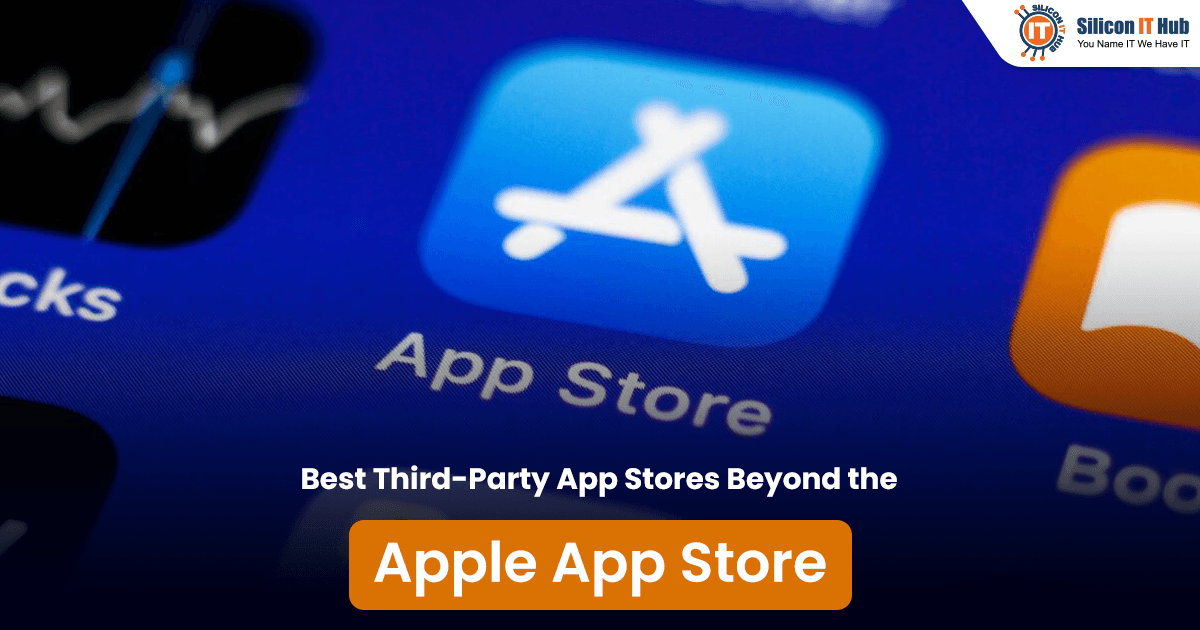
Best Third-Party App Stores Beyond the Apple App Store
Overview
Are you looking for effective iOS App Store alternatives? Well, you are not alone. Today, developers, enterprises, and even end users are in search of some legitimate alternatives to the Apple App Store. If your answer to this question is yes, then we would like to mention that there are legal third-party app stores for iPhone available. However, not all of them are practical, safe, or worth your time. Therefore, it is essential to know which app stores will work best for you.
This post will talk about the best third-party app stores apart from the Apple App Store. These stores are useful for entrepreneurs or business owners who want to build or distribute their apps. Let’s start with some common reasons why people are looking for App Store alternatives.
Why Enterprises Explore App Store Alternatives
When it comes to publishing and distributing iOS apps, we have only one name that comes to mind- Apple App Store. Though it is sophisticated, secure, and trusted, it has some limitations that developers and business people feel alike. As per our experience as a custom iPhone app development services provider, we give the following list of the most common pain points-
- Strict approval guidelines
- Long review cycles
- Revenue-sharing constraints
- Restricted app functionality in some instances
- Limited flexibility for enterprises
These pain points are categorically harmful for enterprises that want niche app solutions and region-specific apps. Here, iOS App Store alternatives emerge as a useful option.
A third-party app store for iPhone is any platform that is outside the Apple App Store. It enables app distribution on iOS devices. These stores are beneficial for developers, regulated markets, and enterprises. However, it is fair to mention that Apple has not supported all third-party stores as legal. Some of the third-party app stores are unofficial. They bypass the rules of Apple’s ecosystem.
Legal third-party app stores for iPhone rely on Apple-approved APIs and new regulatory frameworks like EU DMA changes. They prioritize compliance, transparency, and security. Therefore, enterprises prefer such stores. On the other hand, unofficial stores require jailbreaking and modifying profiles. These unofficial stores offer freedom, but they may put the app's stability and security at risk.
This is one of the major reasons businesses and developers look for legal third-party app stores for iPhone.
Why Teams Look Beyond the App Store
CTOs and product teams need flexibility within Apple’s ecosystem. However, it is not possible due to the close-ended nature of this system. Whether enterprise apps or compliance-heavy applications, they always find it difficult to get published on the Apple App Store. Moreover, traditionally, this App Store does not support controlled user access and quicker deployment cycles for iPhone users.
Therefore, entrepreneurs should find iOS App Store alternatives that actually work. Let’s compare both the Apple App Store and third-party app stores.
Comparison between App Store and Third-Party Distribution
The Apple App Store and other third-party app stores for iPhone or iOS apps have some noteworthy differences. For example, the Apple App Store has a broad consumer reach and limited customization facilities. It has slow approval cycles and requires revenue sharing. The Apple App Store offers a strong security model as a closed-ended ecosystem.
Third-party app stores, on the other hand, offer quicker updates for apps in an enterprise-friendly ecosystem. Controlled or restricted distribution of apps is also possible in these app stores. However, they have limited public reach and require careful planning for compliance. It is fair to say that developers or app owners should remain alert for safety.
Here is a quick table of comparison between the App Store and third-party distribution.
| Aspect | Apple App Store | Third-Party App Stores |
| Consumers Reach | Broad public and consumer reach | Limited public reach |
| Customization | Limited options | More flexibility |
| Approval Cycle | Slow | Quicker |
| Revenue Model | Requires revenue sharing with Apple | No revenue-sharing requirement |
| Ecosystem Type | Close-ended | Enterprise-friendly |
| Compliance | Managed largely by Apple | Requires careful planning. |
Here we jot down some top third-party app stores.
Top Third-Party App Stores for iPhone
We mention the most practical and legal third-party app stores for iPhone below:
AltStore
Security Level- High (when used properly)
Availability- Global (using sideloading)
Why Is It Secure?
- No need to jailbreak
- Use your own Apple ID
- Open-source and audited by the iOS community
- No modded/pirated app focus
Best for: Installing legitimate apps like emulators or developer tools that are not allowed in the App Store.
Onside
Security Level- High (when used properly)
Availability: Europe
Why Is It Secure?
- Built under Apple’s new alternative app store rules
- No need to add apps to Apple’s App Store
Best for: Users in the EU who want apps directly from legitimate third-party marketplaces. It is available within the European Economic Area (EEA).
Setapp (EU iOS Marketplace)
Security Level- High
Availability: European Union
Why Is It Secure?
- Operated by the established software company MacPaw
- Curated subscription-based app catalog
- Apps go through Apple’s notarization
Best for: Premium productivity and utility apps in one subscription bundle
Aptoide (EU iOS Version)
Security Level: Moderate to High
Availability- EU
Why Is It Secure?
- Long-running alternative marketplace
- Operating under Apple’s EU framework
- Uses malware scanning systems
Epic Games Store (EU iOS Version)
Security Level- High
Availability- EU
Why Is It Secure?
- Operated by a major gaming firm
- Apps have Apple’s notarization
- Direct distribution under new DMA rules
Best for: Game distribution outside Apple’s App Store fees.
Apart from these legit and popular options, some riskier and unofficial third-party stores are the following:
- EonHub
- CockerNutX
- TweakBox
- AppValley
These stores do not operate as Apple-approved marketplaces. Moreover, they may distribute modified or pirated apps and get revoked frequently by Apple. Therefore, you need to exercise caution. Apple can revoke certificates of such alternatives at any time, causing apps to stop working without your information.
Here, it is fair to say that Apple officially allows alternative app stores in certain regions, like the EU and Japan, only. A reputable iPhone app development company can help you choose the right option.
Role of Custom iPhone App Development Services
A custom iPhone application development company brings the necessary expertise in choosing the right legal App Store alternative. It considers various aspects of third-party distribution at scale. Some of these aspects are-
- Secure provisioning
- Deployment pipeline
- Device compatibility
- Policy enforcement
- Certificate management
Simply put, custom iPhone app development services help companies or developers design the app and make the distribution model. In a way, app development companies can help companies select the right app store alternatives. They also follow best practices for ensuring the effective distribution of apps through these options.
Best Practices for Using iOS App Store Alternatives
Using iOS app store alternatives is beneficial for enterprises. They can give the necessary flexibility and control to companies. However, it is essential to handle them correctly. Here, the first and foremost step is staying compliant with Apple’s policies. This is necessary, as non-compliance can lead to revoked certificates, and apps can get blocked. Security is another important factor to consider. Strong access controls and data encryption are essential.
Finally, companies should limit distribution to the right audience, such as internal teams, partners, or specific regions. Regular monitoring of updates and certificates can help you prevent unexpected downtime or related issues for the app. Experienced iOS developers can ensure that your app follows best practices at every stage. Altogether, when you follow such best practices, you can leverage the advantage of third-party iOS app stores.
Looking for a Reliable iPhone App Development Partner for Your Company?
LET’S CONNECTConcluding Remarks
Third-party app stores may seem risky for iPhone apps at first. However, the real risk lies in choosing the wrong distribution platform. You should focus on legal third-party app stores for iPhones and consult an experienced custom iPhone app development services provider. This gives flexibility to adapt to business needs without compromising compliance. The future of iOS app development and distribution lies in choosing the right developer and third-party app store.
Silicon IT Hub is a leading iPhone app development company with over two decades of experience in software development. Our in-house team of experienced iPhone app developers can build enterprise-grade, feature-ready apps to drive growth through scalability and innovation. Contact us to learn more about the importance and business benefits of custom iPhone apps.

 Have an Idea?Let’s Build It Together!

 B1-Ground Floor, Safal Profitaire, Corporate Road, Prahladnagar, Ahmedabad, Gujarat, India - 380015


 + 1 302 803 4919
 usa@siliconithub.com

